
The Heart of Healing
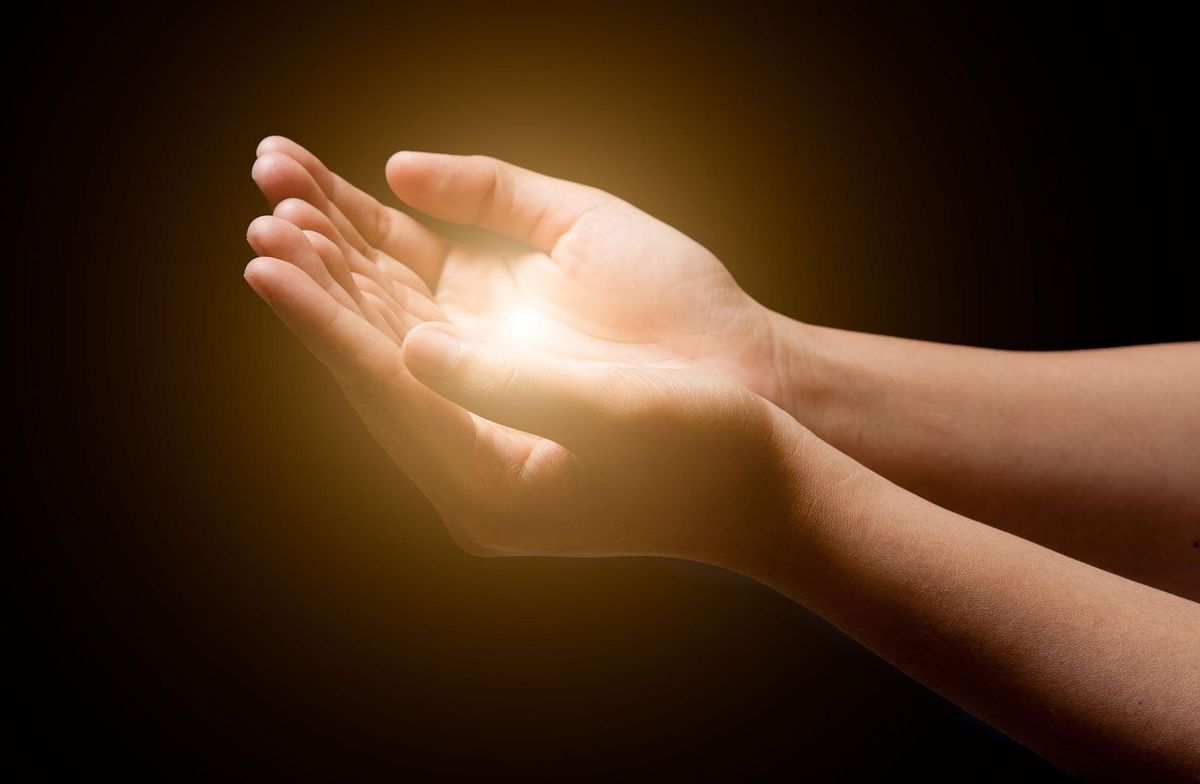
For much of my life, I believed healing was about repairing what had been damaged.
Sometimes it is. A broken bone needs to mend. An infection needs treatment. An immune disorder needs to be suppressed. A heart rhythm sometimes needs the remarkable skill of physicians, nurses, medications, and technology. I have become deeply grateful for all of those things.
But over the last few months, I have come to realize that healing has another dimension I had not fully recognized before.
—
The realization emerged during a series of cardiac events that eventually led to an ablation procedure. Over the course of three weeks, I was hospitalized three times with ventricular tachycardia. There were medications to adjust, physicians to see, decisions to make, and the unfamiliar experience of depending upon others to help keep my heart functioning safely while treatment was arranged.
An ablation had been scheduled, but I remained uncomfortable with the medical support surrounding the wait. Through the advocacy of my daughter, I was able to see another electrophysiologist whose own schedule was ordinarily difficult to enter. He listened carefully, reviewed what had been happening, made adjustments to my pacemaker, and helped me understand more clearly what was occurring.
Before leaving the room, he mentioned that sometimes he could rearrange his schedule.
A few hours later, I received a phone call. He had found room for my procedure despite an even longer waiting list for ablations. It would take place soon, about a week before the procedure already scheduled elsewhere.
After a period when so much had required effort, something had simply opened.
The ablation lasted nearly seven hours. Several areas contributing to the arrhythmias were treated, and by the end of the procedure they could no longer trigger the dangerous rhythms. Time would tell what the longer-term outcome might be, but an important threshold had been crossed.
I came home grateful, yet I noticed something else. For several weeks before and after the procedure, I found myself unable to write. Anxiety and stress were certainly present, but I was neither depressed nor angry. It felt more as though something within me needed time to settle before it could be understood.
—
Eventually, one recognition began to surface.
Throughout my life, I had unconsciously confused humility with refusing to receive. I had lived with a quiet assumption that accepting something not equally available to everyone somehow diminished another person or made me less entitled to receive it.
Looking back, I can see how deeply that belief shaped my participation in life. When help appeared, I often minimized it. When opportunities arose, I sometimes stepped back. When others genuinely wanted to offer something, I was more comfortable making myself easy to accommodate than simply allowing myself to receive.
I had thought of this as humility. Now I see that, at times, it was something else.
During those weeks of cardiac uncertainty, receiving became unavoidable. I depended upon physicians whose skills I did not possess, technology designed to protect my heart, family willing to remain supportive and close, and a daughter who advocated when I no longer had the energy to continue pushing against an unresponsive system.
Gradually, I began to understand that receiving did not make me weak, entitled, or more important than anyone else. It allowed me to participate in what was actually happening.
Help was being offered. I could refuse it because of an old idea about who I should be, or I could accept what was genuinely life-giving.
Healing, I began to understand, is not only something we do. It is also something we allow.
—
That recognition has continued to widen. For years I have explored dreams, symbols, recognition, healing, sovereignty, and what it means to be human. I once thought of these as separate areas of inquiry. Increasingly, they seem to describe different expressions of the same movement.
Again and again, healing seems to involve the restoration of relationship — with the body, with fear, with ourselves, with other people, and with life itself.
Perhaps this is why some of our deepest struggles cannot be resolved through information alone. Information may help us understand what is happening, but understanding does not automatically change the relationship that has formed around it.
Healing often asks us to meet what is already present differently.
The reflective mind can be an important part of that process. Perspective does not require us to move away from what we feel. It can give feeling a larger place in which to exist. Fear, grief, anger, or uncertainty may still be present, but they need not become the whole of our experience. Sometimes the ability to see what is happening from a little farther back is what allows us to remain present without becoming lost inside it.
Sometimes that means acting. Sometimes it means receiving. Sometimes it means recognizing that a way of protecting ourselves that was once necessary has begun to prevent something new from reaching us.
—
My experience with my heart has also changed my relationship with mortality and with whatever may lie beyond the life I presently know. Repeated encounters with the possibility of dying have not given me answers about death. They have simply made me less inclined to bargain with life.
I can want very much to remain here, accept excellent medical care, and participate fully in keeping my body alive while also knowing that life cannot be held indefinitely. Those two positions no longer feel contradictory.
That may be one of the quieter forms of healing I have experienced.
I can now see that illness revealed relationships I had not previously understood very clearly. I was learning to trust without surrendering discernment, to advocate for myself without believing I was taking something from someone else, and to accept care without becoming smaller because I needed it.
I was also learning that sovereignty does not require standing alone. Sometimes sovereignty is what allows us to recognize whose hand we can safely take.
—
I no longer think healing is simply the absence of disease, nor do I believe it is the achievement of some ideal version of ourselves. Healing feels quieter and more encompassing than that.
It is the gradual restoration of our capacity to remain in honest relationship with what is — with our bodies and histories, with one another, with the life we are living, and eventually with the mystery beyond what we can know.
Sometimes that relationship asks us to stand on our own. Sometimes it asks us to accept another's hand. Sometimes it asks us to work very hard to remain. And perhaps, eventually, it asks us to release the effort.
Wisdom may lie partly in learning the difference.
For me, the heart has become more than an organ. It has become a place from which I am learning something about relationship itself.
Life is fragile, but it is also profoundly relational. We depend upon one another far more than our ideas about independence sometimes allow us to acknowledge. Receiving what is genuinely offered does not diminish sovereignty. Under the right conditions, it may be one of its fullest expressions.
Perhaps the deepest healing is not found in becoming independent of need, uncertainty, or one another.
Perhaps it lies in becoming increasingly able to meet all of them without abandoning ourselves.
That has become, for me, the heart of healing.