
A House That Was Not Mine
A Personal Dreaming Mind Case Study
Dreams rarely present ideas directly.
Instead, the psyche constructs environments through which experience can be reorganized.
Although a dream may contain many symbols, the most important structure to notice is its personal theme. The images that appear — places, figures, objects, and actions — arrange themselves around this theme so that something within awareness can come into clearer view.
Understanding the dreaming mind begins less with interpreting individual symbols and more with recognizing the pattern the dream is forming.
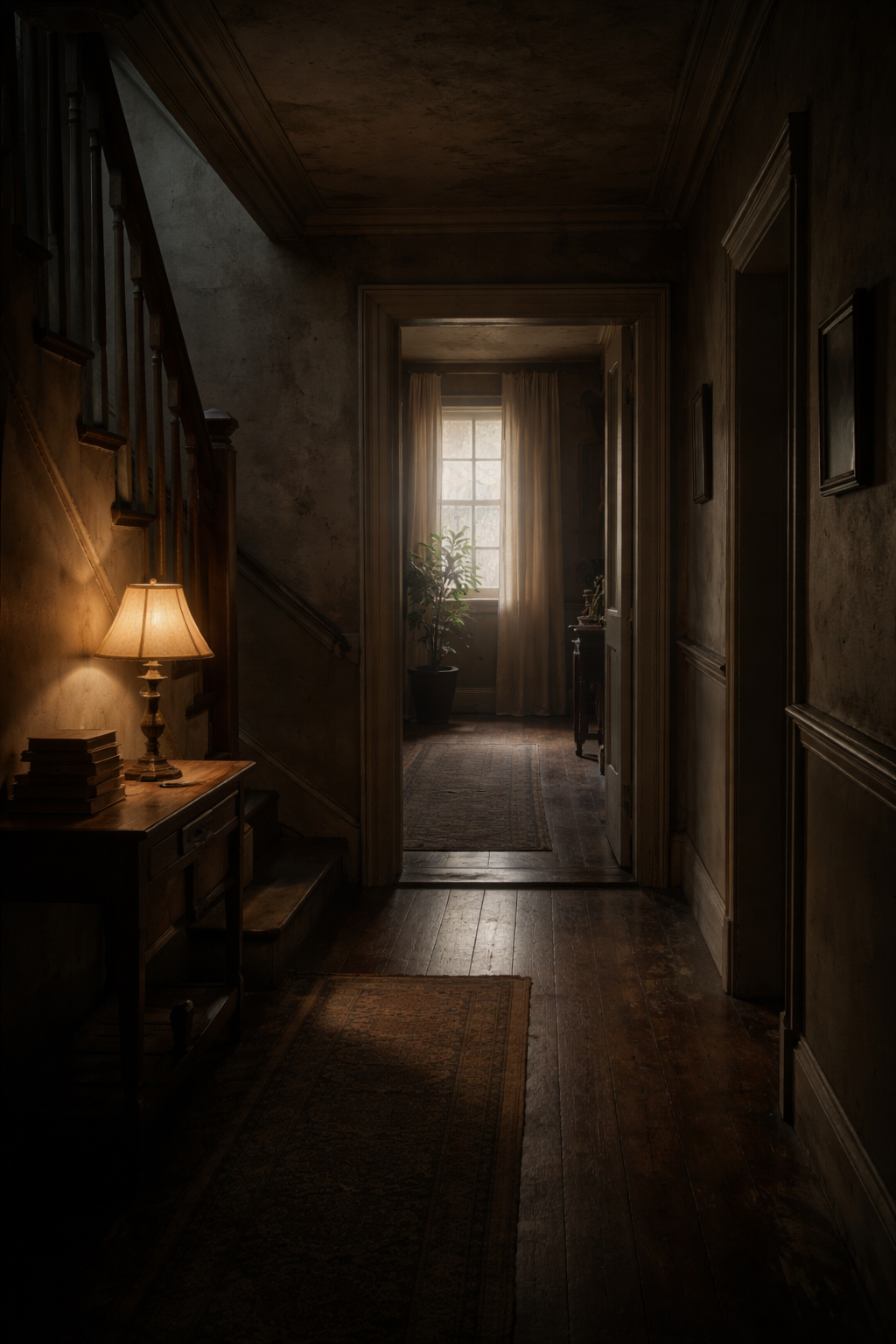
In this dream, the organizing image was a house — yet it was not a house that belonged to me.
I moved within a structure that felt real and navigable, but carried a subtle sense of displacement. The house could be entered and explored, yet it did not originate from me. Its rooms and boundaries seemed to exist independently of my own history with it.
Dreams often use places this way.
A house can represent the structure of the psyche itself — the way experience has been arranged, the rooms in which memory and identity have taken shape, the boundaries that define what is held within awareness.
But this house was not mine.
Instead of exploring a familiar inner structure, awareness was placed inside something already formed — a pattern that had been entered rather than created.
The psyche was not simply presenting a house.
It was showing the experience of inhabiting a structure that did not originate from the self.
The Image Field
Dreams organize meaning through images rather than explanations.
Here the house functions as the central image field — the environment through which awareness moves.
When houses appear in dreams, rooms and thresholds often represent regions of experience or identity. Movement through the house allows the psyche to explore how awareness relates to those regions.
Yet the dream emphasizes that this structure does not belong to the dreamer.
Human identity is rarely formed entirely from within.
Family histories, cultural expectations, and inherited narratives often shape the interior structures we find ourselves living inside.
The dream does not critique these structures.
It simply reveals them.
Movement Within the Dream
Equally important in dreams is how awareness moves through the environment that has been created.
In this dream, the turning point came through recognition that the house was not mine. And with that recognition came a second realization: it was not mine to set right.
The structure existed as it was.
Its disorder, its unfinishedness, its "mess" were not mine to repair.
For a moment there was an emotional pull to remain — to restore coherence within the house. But another awareness emerged just as clearly.
This was not my structure.
The recognition formed not as rejection, but as boundary.
Once that boundary became clear, the emotional tension experienced within the dream surrounding the situation began to release.
Dreams often work this way.
Emotion gathers around an image until awareness recognizes what the image is showing.
The dream did not resolve the situation by fixing the house.
It resolved it by clarifying the relationship between the dreamer and the house.
What the Psyche Is Doing
Seen this way, the dream is not offering interpretation.
It is performing a function.
The psyche is creating a symbolic environment that allows awareness to perceive something that would otherwise remain implicit: the difference between the self and the structures it inhabits.
The house represents pattern and inherited arrangement.
The dreamer's presence within it represents awareness encountering that pattern.
By presenting the house as something not originally belonging to the dreamer, the psyche gently separates identity from structure.
Once a structure becomes visible, it can be inhabited more consciously.
***
The Continuing Work of the Dream
Dreams rarely complete their work within the dream itself.
Instead, they introduce images that continue organizing experience after waking.
The image of a house that is not one's own may remain quietly active in awareness, influencing how one notices patterns of behavior, inherited assumptions, or interior arrangements that once seemed inseparable from identity.
The dream does not demand immediate change.
It simply reveals the structure.
Recognition itself begins the work.
The house remained as it was.
But the dreamer now knew it was not her house.
And in that knowing, the dream's personal theme had quietly come into view.